
One prompt · Four beats

Text to Shan Shen Bu

Text-to-video is the fastest way to test an idea. Describe who is in the shot, where they are and what the light does, and the studio builds the four-beat routine around that scene.

It is also the honest option when you do not have a usable photo: a generic performer is better than a blurry face the model has to guess at.

Images on this page are AI-generated illustrations, not records of a real event.

Updated 23 October 2026

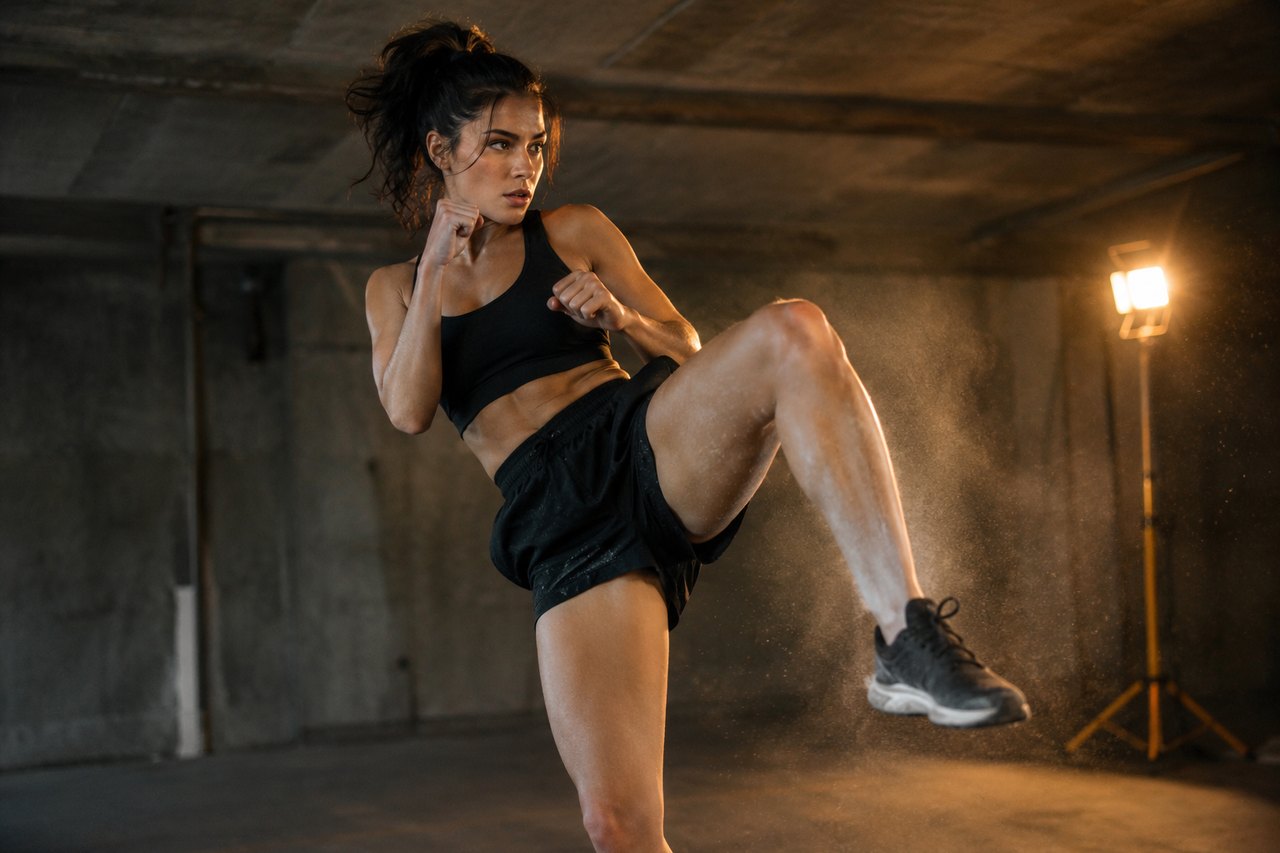
A performer doing a side dodge in a neon-lit parking garage, one arm swinging, cinematic wide frame
Length
10–15 seconds
Resolution
480p · 720p · 1080p
Aspect ratio
9:16 · 16:9 · 1:1
Watermark
None on paid renders
Model
Seedance 2.0
Moderation
SeeAPI, fail-closed

Scene first, choreography second

Write the room, the light and the camera before you describe the dance. The four beats are already in the preset.

One subject

A single performer is easier to direct. Crowds, mirrors and background dancers give the model more to invent.

No photo, no likeness promise

A written prompt casts a generic adult. Use it to test a scene, then repeat the winning prompt with a real photo.

How it works

  1. 1

    Describe the scene

    Write two sentences: who is in the shot and where it happens. Name the light and one background detail that sells the location.

  2. 2

    Keep the routine intact

    Leave the four-beat sentence in place. It is what makes the clip read as shan shen bu rather than generic dancing.

  3. 3

    Choose length and resolution

    10 seconds at 720p is 30 credits. 15 seconds and 1080p cost more; the price is shown before you confirm.

  4. 4

    Add a photo later

    Once the scene works, upload a photo and keep the same scene sentence. The identity sentence takes over from the generic casting.

Start from a tested prompt

Each prompt is complete: subject, scene, camera and what must not change. Copy it or open the studio with it pre-filled.

A vertical AI render of a dancer in a rainy street, warm shop lights behind, mid-kick

Blue practice hall

The original studio look: four beats, one fixed camera, deadpan face.

Prompt (English)

Bright blue mirrored dance studio with a wooden floor and a ballet barre along one wall. The subject performs the shan shen bu (闪身步) flash-step routine in four clear beats: first a sudden sideways dodge, stepping the feet wide apart and dropping low before springing back to centre; second a langzi kick, lifting one knee and kicking the foot out to the side while the opposite arm swings across; third a bear shake, both arms flinging up and outward while the shoulders and whole body shake; fourth a deadpan head sway that ends with a direct look into the camera. If a reference photo is attached, keep the exact face, hair, body, outfit and background; do not add a second person. Fixed phone camera at chest height, one continuous take, vertical 9:16, no text, no watermark.

Use in studio

Office escape

Dodge out of work in an open-plan corridor, then finish the routine.

Prompt (English)

A plain open-plan office corridor with desks, monitors and a colleague walking past in the background. The subject performs the shan shen bu routine in four beats: a sideways flash step, a knee-lift side kick with an arm swing, a full-body shake with both arms up, then a deadpan head sway and a look into the camera. If a reference photo is attached, keep the exact face, hair, body and outfit. Fixed phone camera at chest height, one continuous take, vertical 9:16, no text, no watermark.

Use in studio

Pet living room

A cat or dog does a playful version on its hind legs at home.

Prompt (English)

A cosy living room with a sofa, a rug and warm afternoon window light. The cat or dog from the reference photo stands on its hind legs and does a playful four-beat shan shen bu: a quick side-step, a little kick, a full-body shake of the fur, then a head sway to the camera. Keep the animal's exact breed, fur colour and markings; do not turn it into a person and do not add a second animal. Fixed low camera, one continuous take, vertical 9:16, no text, no watermark.

Use in studio

A prompt formula that survives the model

Use six parts in this order: subject, scene, four-beat action, camera, identity rule, exclusions. Subject and scene set the world; the action is the routine; the camera keeps it readable; the identity rule protects the face; the exclusions remove text, logos and extra limbs.

Short sentences are easier for the model to follow than one long paragraph. Six sentences is usually enough. A 300-word prompt with five camera cuts gives the model more chances to lose the beat.

Good scenes for a first test

A bright dance studio is the most reliable: even light, a plain floor and nothing in the background. An office corridor is second, because straight lines and a fixed camera make the side-step read clearly. A living room works if the furniture does not block the feet.

Hard scenes are crowds, mirrors, stairs and tight spaces. They are not impossible, but they give the model more geometry to invent and more ways for the routine to break.

What text-to-video cannot do

It cannot reproduce a specific person from memory, copy the original teachers’ faces, or use the original audio. It also cannot guarantee a perfect four-beat count. Treat the first render as a draft: check that the side-step and the kick read, then refine the scene.

Frame-level continuity is the other limit. Hands, feet and background details can drift between beats, and a 15-second clip has less room to recover than a longer take. Keep the action simple, keep one subject, and re-render the scene rather than the whole routine when only one beat misses.

Questions people ask

Do I need a photo at all?

No. A prompt alone is enough. The result will show a generic performer rather than a specific person.

Can I mix a prompt and a photo?

Yes. Upload the photo and edit the scene sentence around it. That is the usual way to move a specific person into a new room.

How long should the prompt be?

Two sentences of scene plus the four-beat sentence and one camera sentence. Longer is not better.

Why is there no audio?

The clip is generated silent so it never carries the original recording. Add a trending sound in TikTok or your editor.

Can I describe a pet?

Yes, but a pet photo gives much better anatomy than a written description. Use the pet scene and a clear photo.

What if the prompt is rejected?

The content check runs before the render. If it blocks the prompt, the task fails and the credits are returned. Edit the text and try again.

Turn your photo into a clip

Start with the preset on this page, or write your own shot. Credits are shown before you generate, and failed renders are refunded.